Center console (21–28 ft)
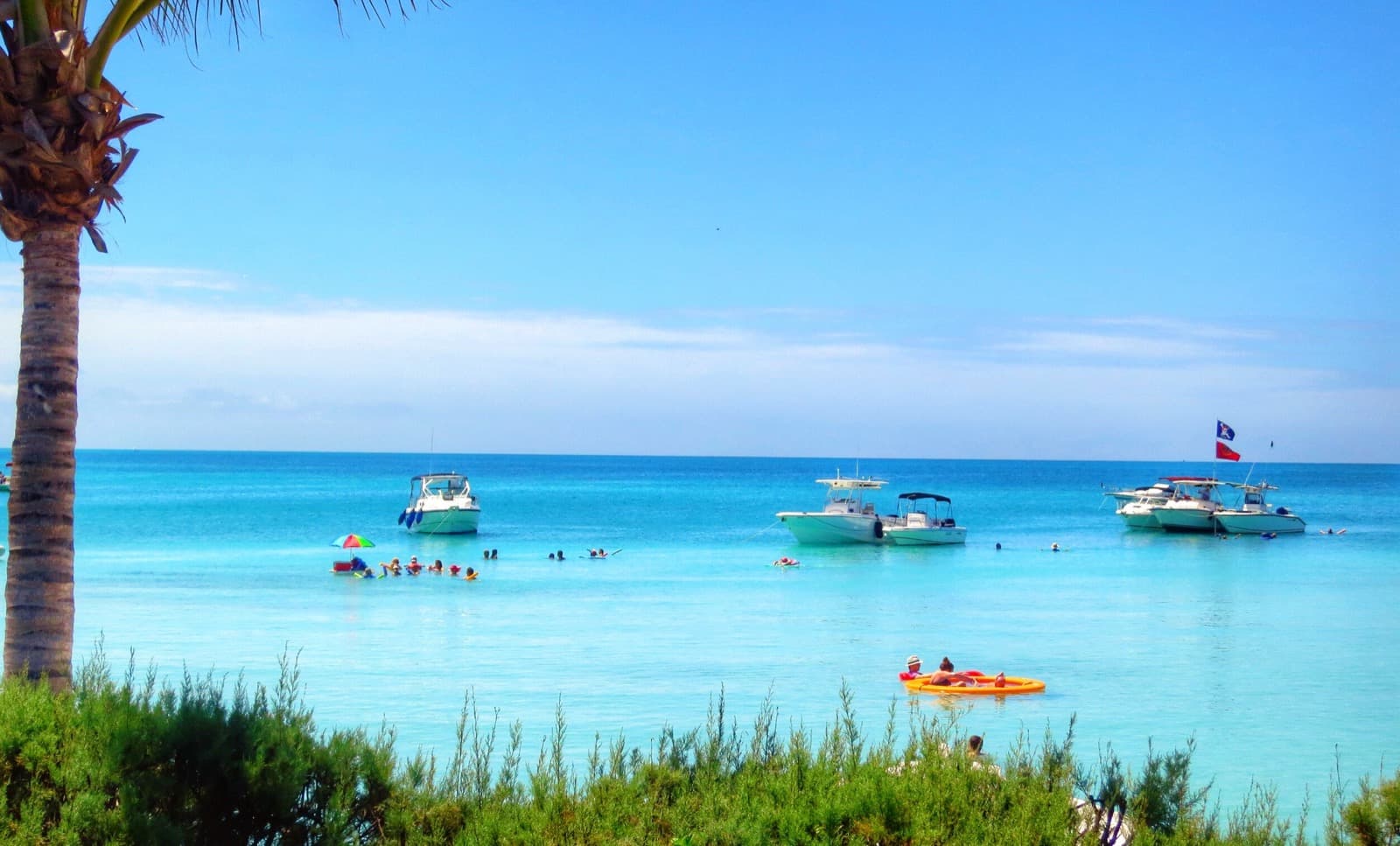
Best for: first-time Bermuda owners, fishing-plus-family, day trips. A center console is a single-engine (or twin) power boat with an open deck, console-mounted steering and a T-top for shade. Models from Sea Pro, Robalo, Boston Whaler, Mako and Carolina Skiff dominate the Bermuda used market.
Pros: incredibly versatile, easy to maintain, holds resale value, fits any major Bermuda dock, handles reef chop better than flat-bottom boats. Cons: open layout means weather affects you, smaller models can feel cramped with six adults.
If you're buying your first boat in Bermuda, this is almost always the right answer. A 23 to 25-foot center console with a 200 to 250 hp outboard, T-top and a decent stereo will do 90% of what you want a boat to do here.
Pontoon (22–30 ft)
Best for: families with multiple kids, entertaining, anchor-and-float days. A pontoon sits on twin aluminum tubes (or triple, called a "tritoon") with a flat deck on top. Huge guest capacity for the footprint, low boarding from the dock or water, stable at anchor.
Bermuda pontoons range from 22-foot family boats to 30-foot two-deck party rigs (our Pontune Paradise charter boat is in this category. 25 guests, water slide, the whole thing). Pros: maximum deck space per dollar, easiest boarding of any boat, best for groups. Cons: slower top speed, more wind affected, harder to dock in tight slips.
Sport fisher (28–40 ft)
Best for: serious fishing, offshore use, the Argus and Challenger Banks. A sport fisher is a dedicated fishing platform: twin diesel engines, fighting chair or cockpit setup, livewell, outriggers, often a cuddy cabin for shade and overnight trips. Sport fishers are the right call if fishing is the primary use.
Bermuda's offshore fishing is world-class for yellowfin tuna, wahoo, marlin and mahi. The 25-mile run to the Argus and Challenger Banks needs a boat that handles open ocean comfortably. Pros: dedicated fishing setup, range, sea-handling. Cons: expensive to operate, diesel maintenance, overkill for casual users.
Day cruiser / cabin cruiser (24–35 ft)
Best for: cabin comfort, overnight use, weather variability. Day cruisers and cabin cruisers have an enclosed cabin (head, sleeping berths, sometimes a galley) plus an outdoor cockpit. Brands like Sea Ray, Regal, Chaparral and Cobalt are common.
Pros: shelter from sun and weather, overnight capability, more comfortable for longer cruises. Cons: less open deck for sunbathing or fishing, higher maintenance with the cabin systems, sterndrive (typical) is more complex than an outboard.
PWC / jet ski (Sea-Doo, Waverunner)
Best for: speed runs, beach hops, second-vessel ownership. Personal watercraft are fast, fun and the cheapest entry to Bermuda boat ownership. They make excellent second boats for short blasts or pairing with a bigger family boat.
Pros: low entry cost, easy to store, quick fun. Cons: limited range, no shade, capacity of 1 to 3 people, not practical for a full day on the water. Bermuda's marine reserves and protected swim zones limit where you can ride at speed. Sean walks you through the boundaries before you launch.
What Sean recommends to most buyers
For 80% of Bermuda first-time buyers, a 23 to 25-foot center console with a 200 to 250 hp single outboard is the right answer. It does fishing, family days, sunset rides, anchor stops, and dock-side parties. Strong resale market in Bermuda. Reasonable insurance. Outboard maintenance is straightforward. Fits any dock.
If your use is heavily party-oriented or you've got a big family, switch to a pontoon. If your use is heavily fishing-oriented and you're chasing tuna offshore, step up to a sport fisher. Otherwise: center console.
Tell Sean your specific use case and budget on WhatsApp and he'll narrow it to the exact model and year range that fits, with three to five options to compare.